Post-Harvest Care: Why the First Hours Matter
5 min read
Post-harvest flower care protects vase life by limiting dehydration, heat exposure and contamination as soon as stems are cut. The priorities are a clean cut, prompt hydration and storage suited to the species; later vase care cannot reliably reverse damage caused earlier.
Hannah Moore · first published · revised
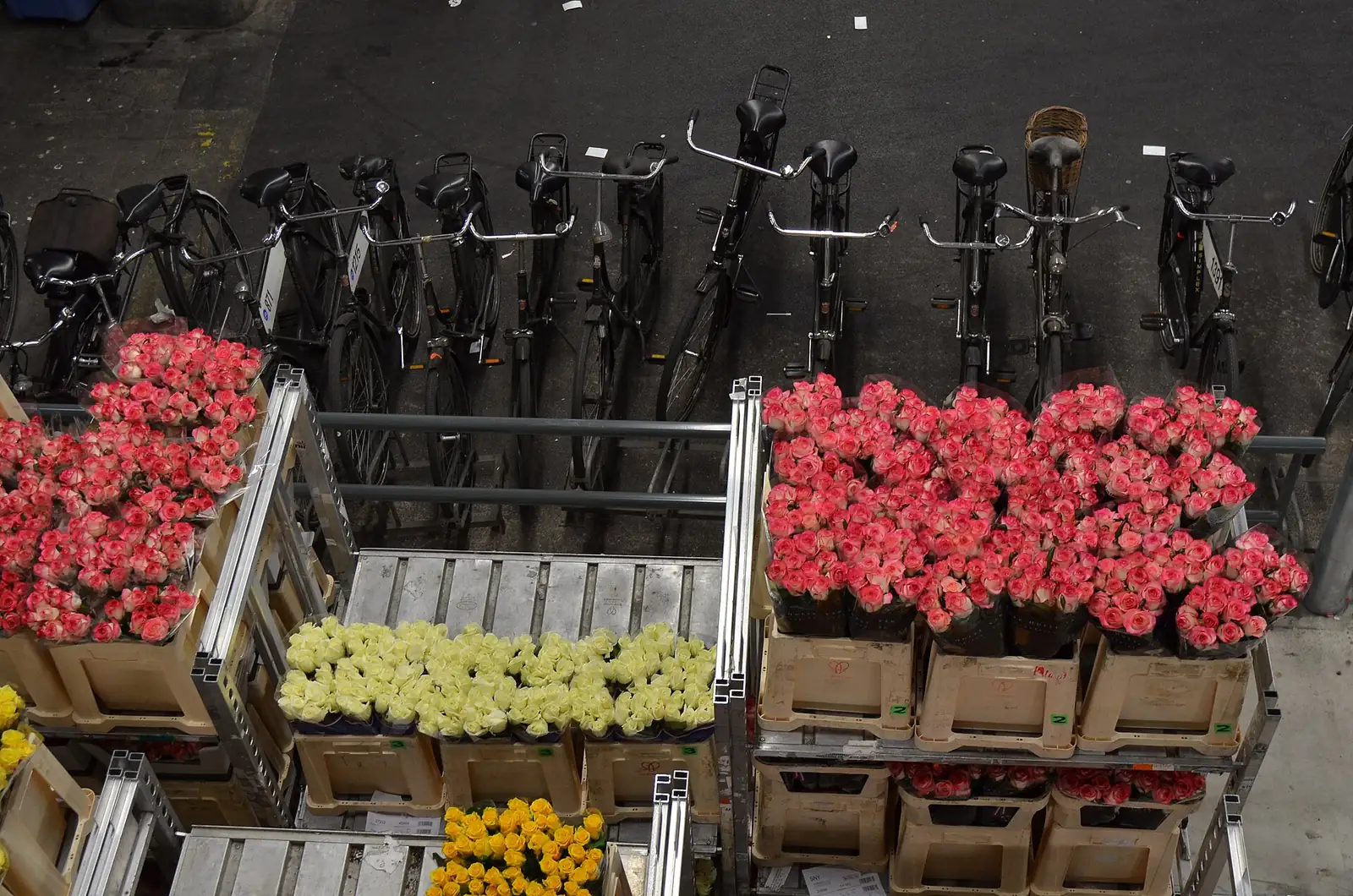
A cut stem is still alive
A cut flower continues to lose water and use stored reserves. Removing it from the plant changes how those needs are met: its supply now depends on the cut stem and the conditions around it. A flower can therefore look acceptable at unpacking while carrying stress that becomes visible later.
This is why a grower, wholesaler, florist and recipient each influence the final result. “Freshly delivered” describes one handover, not the whole history of the stems. Ask when the flowers were received, what treatment they require and whether their opening stage suits the intended use. The related article Greenhouse Climate Mistakes That Reduce Cut Flower Quality covers problems that may begin before cutting.
Watching a much-anticipated bouquet droop the next morning is disappointing. A few careful steps at each handover give those flowers a better chance to open and be enjoyed as intended.
Hour zero: prepare the next step before cutting
The xylem is the water-conducting tissue inside the stem. Damage, air entry and microbial contamination can interfere with uptake. Putting a stressed flower in a full bucket does not necessarily mean water is reaching the flower head effectively.
Preparation reduces avoidable delays. Set out washed containers, suitable water or solution, labels and sharp tools before the first stems arrive. Keep an obvious place for damaged material, so it is not returned to the fresh stock. A short routine followed consistently is more useful than rushing through several treatments without knowing which crop needs them.
| Stage | Action | Check before moving on |
|---|---|---|
| Before cutting or unpacking | Prepare tools, containers and the appropriate solution | Crop instructions and dilution are available |
| At receipt | Identify the crop and inspect the stems | Damage and unsuitable maturity are recorded |
| Processing | Remove submerged foliage and make a clean cut where required | Stem bases reach the solution without crowding |
| Conditioning and storage | Use the crop's treatment time and temperature | Temperature is measured, not guessed |
| Before dispatch | Check condition, water provision and the receiving address | Care instructions travel with the flowers |
There is no single safe number of minutes that all flowers can spend dry on a bench. Species, temperature, maturity and prior handling differ. Treat unnecessary waiting as a process problem rather than trying to use a universal deadline.
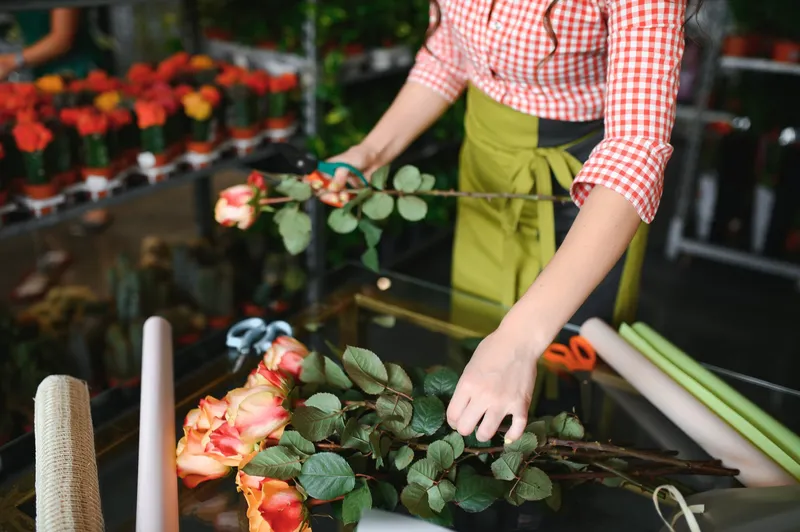
Hydration takes more than putting stems in water
A sharp tool should make a clean cut without crushing the stem. Remove leaves that would sit below the waterline and avoid forcing too many stems into one container. Mississippi State University explains how cut quality affects water uptake. Choose a tool you can use safely and that suits the stem, including proper pruning shears for tougher material.
Commercial products serve different stages. A hydrator is not automatically a long-term holding solution, and a professional treatment should not be substituted casually for consumer flower food. NC State Extension distinguishes these products and stresses correct concentration. Follow the crop and product directions rather than combining leftover solutions.
Measure the water as well as the product. If a packet is labelled for one litre, use one litre; a smaller vase does not make the same dose more effective. That is a dilution example, not a recommendation for every packet. Do not assume clear water is free from contamination, or that adding more preservative can rescue a dirty container.
Cooling: two crops, two very different requirements
The UC Davis Postharvest Technology Center provides crop-specific guidance. Its rose fact sheet specifies 0–1°C for dry storage, whereas its anthurium guidance gives 12.5–20°C because the tropical crop is sensitive to chilling. These are professional storage examples, not instructions to put every household bouquet in a refrigerator.
For mixed loads, identify temperature-sensitive material before assigning storage. A cold-room setting that suits one crop may damage another. Record the temperature and inspect actual conditions around the flowers, including doors and loading areas, rather than relying only on a control-panel display.
What local handling can and cannot tell you
A shorter delivery route can reduce transfers, but distance is not a quality guarantee. A nearby supplier can mishandle flowers; a longer chain can maintain suitable conditions. What matters is the sequence of cuts, hydration, temperatures and handovers, including the final stretch to the recipient.
When discussing an order with a florist in Vienna who plans around the season, ask how the selected varieties will be prepared and when someone can receive them. An office reception, a flat with several staircases and an event venue need different handover instructions. The point is to avoid flowers waiting at an unsuitable location after a carefully managed journey.
The same questions apply to a Warsaw delivery between a studio and an address in Mokotów or Śródmieście. Give the recipient's availability, building access details and a contact number. Do not infer a flower's growing location from the studio's address. Our guide to What “Seasonal” Really Means for Cut Flowers, and How City Florists Source Them separates those ideas.
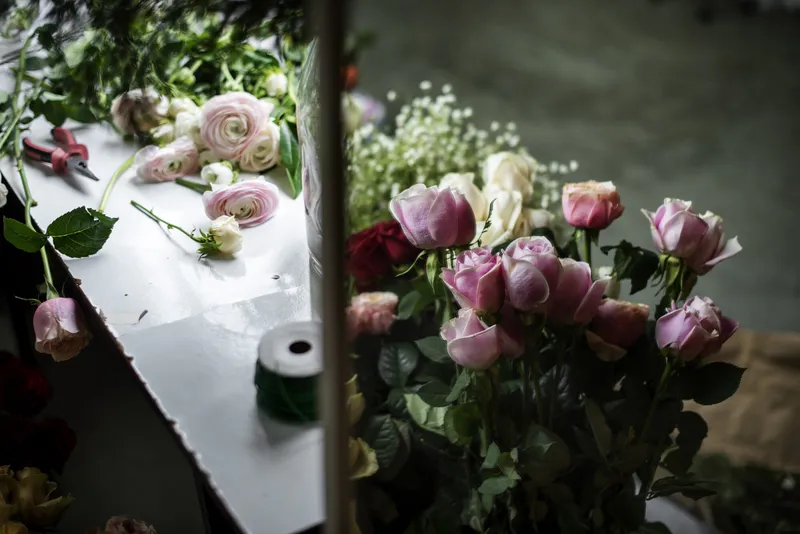
Harvest stage: the tightest bud is not always best
Different crops are harvested at different stages. Cutting too early can prevent normal opening; cutting too late can leave little useful display time. UMass Extension's harvesting guidance gives broad examples: daisy-type flowers are generally cut fully open, while spike-type flowers are commonly harvested with roughly one-quarter to one-half of their florets open.
Those categories are starting points, not replacements for a species or cultivar protocol. A wedding arrangement needed tomorrow and a retail bunch intended for several days of enjoyment may require different maturity choices. Label stock with its receipt date and intended use, then inspect it again before arranging.
For growers, the Spring Greenhouse Checklist for Producing Strong, Market-Ready Cut Flowers helps connect crop preparation to harvest decisions. For buyers, the useful question is simple: “Will these flowers open for my date, and what stage should I expect on arrival?”
Sanitation and a small vase-life check
Separate washing from a quick rinse. Remove old solution, leaves and visible residue before preparing a container for the next batch. Follow the cleaning product's directions and keep old material away from fresh stock. The American Floral Endowment supports research and education for the industry, including resources on problems that affect flower quality.
A simple vase-life check can reveal recurring problems. Keep a few representative stems from a delivery, record the variety and receipt date, and inspect them daily under consistent conditions. Note when petals, foliage or opening become unacceptable. NC State's postharvest guidance recommends straightforward in-house testing; the aim is to compare like with like, not promise every customer the same number of days.
My tip: put a small label on each test vase before filling it. Date, variety and treatment are enough to start. A photograph taken from the same angle each day makes a later complaint easier to discuss than a vague memory that the batch “looked fine”.
If a bouquet wilts early, work through its history before assigning blame: crop, maturity, transport, solution, temperature and home placement. The guide to why cut flowers wilt too soon helps distinguish common possibilities. Recutting and fresh solution may help some stems; neither can reverse every kind of damage.
Common questions
Why do flowers wilt even when they are in water?
Wilting usually means the flower is losing water faster than it can take it up. The cause may be stem blockage, dirty water, air in the xylem, heat stress, damaged stem tissue or natural ageing. Recutting stems with a clean sharp tool and placing them in fresh solution can help, especially if the problem is caught early.
Are the first hours more important than later vase care?
Both matter, but the first hours are foundational. Early dehydration, warmth, microbial contamination or poor harvest stage can create damage that later vase care cannot fully reverse. Good home care preserves quality; good post-harvest handling creates the conditions for that quality to exist.
Should all cut flowers be refrigerated?
No. Many temperate cut flowers benefit from cool storage, but some tropical species can suffer chilling injury if kept too cold. The correct temperature depends on the crop. A florist or grower should handle flowers according to species-specific needs rather than assuming one cold setting suits all stems.
Is flower food really necessary?
For many flowers, a properly formulated flower food is helpful because it supports hydration, discourages microbial growth and may provide sugars needed for opening. It is most effective when used in a clean vase with the correct amount of water. Guessing with household additives is less reliable than using a product designed for cut flowers.