Why Cut Flowers Wilt Too Soon
7 min read
Cut flowers wilt too soon when water loss outpaces uptake, usually because of blocked stems, dirty water, heat or damage before delivery. Start with a clean vase, a fresh cut and a cooler position; a full vase alone cannot fix a stem that is no longer drinking.
Hannah Moore · published · updated
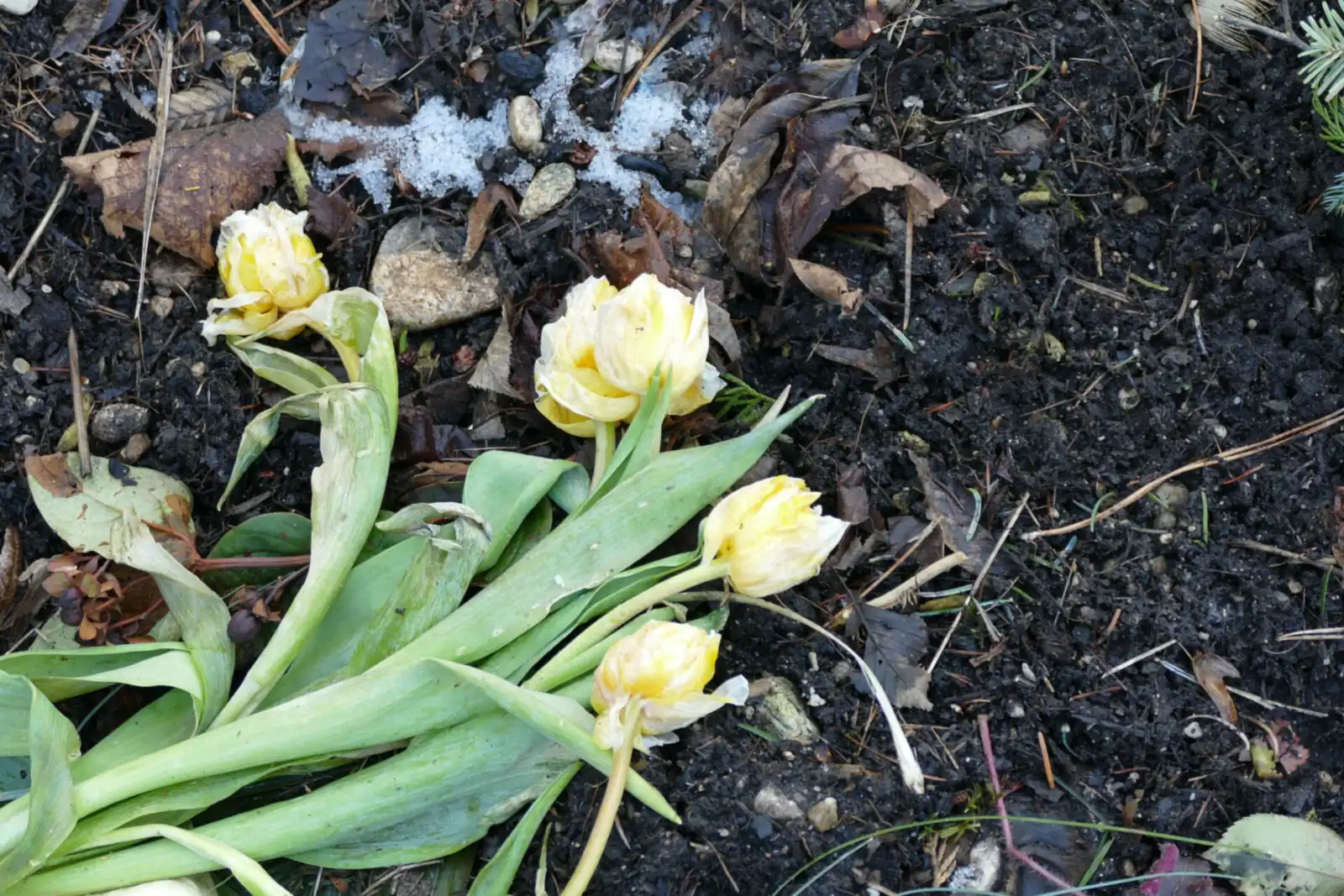
It is disappointing when a thoughtful gift droops before you have really enjoyed it. A drooping rose and a curving tulip can look equally unhappy, but they do not necessarily have the same problem. Look at the whole stem: are the leaves limp, the petals dry, the water cloudy, or the stem simply leaning? That first check is more useful than adding another home remedy to the vase.
Air in the stem
Water moves through tiny vessels in a stem. On the plant, moisture loss from the leaves, called transpiration, helps pull water upwards. After cutting, dehydration and air entering the vessels can interrupt that supply. Recutting removes a damaged or dried section, but it cannot reverse every kind of injury.
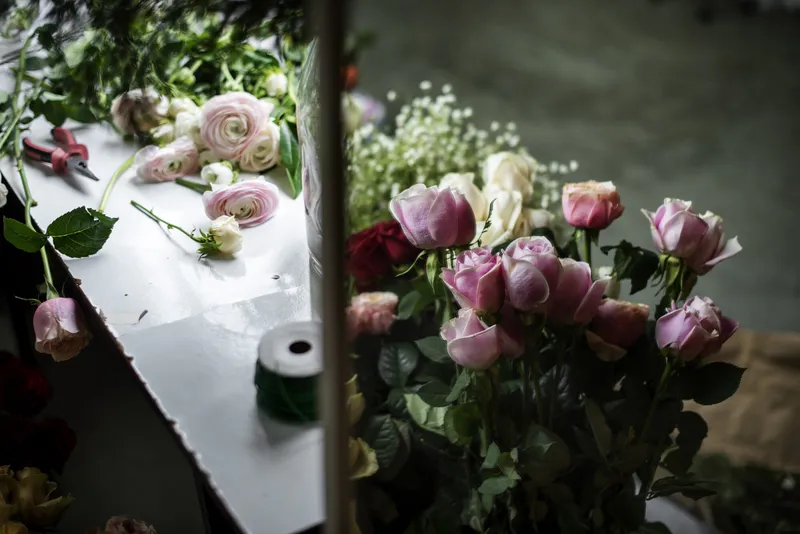
Use a sharp, clean knife or secateurs and remove about 2–3 cm from the base, then return the stem promptly to fresh water. Avoid crushing the end with blunt scissors. The RHS conditioning guide recommends letting prepared stems drink in a cool place for at least two to three hours before displaying them somewhere warmer.
Bacteria in the water
Bacteria and decaying leaves can block water uptake. Slippery stem ends, an unpleasant smell or cloudy water are reasons to clean the vase immediately. Clear water does not prove that it is free of microbes; equally, a slowly falling water level is not a diagnosis on its own. A small bouquet in a wide vase may barely change the visible level.
What helps in practice:
- A clean vase. Wash it with detergent; a quick rinse is not enough.
- No leaves below the water line.
- Flower food from a sachet, if you have it: it contains sugar and ingredients that slow bacterial growth.
- Fresh water every two days, plus a new trim on the stems. In very warm weather, change it daily.
Measure the water before mixing flower food. A sachet labelled for 1 litre needs that volume, not an arbitrary splash in a small vase. Adding more powder does not make it work faster. My practical tip: keep a small measuring jug beside the vase while you prepare the bouquet, then leave the care card where you will see it at the next water change.
Ethylene: the invisible ageing trigger
Ethylene is a plant hormone released as a gas. Sensitive flowers may age or shed petals faster after exposure, although sensitivity varies by species and variety. Keep the vase away from ripening fruit and remove dying stems. This is a useful precaution, not evidence that every early wilt was caused by the fruit bowl.
The takeaway is simple and useful: do not put a bouquet next to a fruit bowl, and remove fading flowers straight away. Growers and wholesalers treat sensitive varieties with special products before they ever reach the shop. I wrote more about how this works in the supply chain in a note on ethylene damage in cut flowers.
Heat and time in transit
Warm conditions increase water loss and the rate at which flowers use their stored reserves. There is no dependable household rule that one hour of heat removes a fixed number of hours of vase life: the effect depends on the flower and its handling. The early stages are explained in the note on post-harvest handling.
For a delivery, ask how long the bouquet is likely to remain out of water and who will receive it. When arranging Vienna flower delivery, give the floor, doorbell name and a reachable contact, especially if the building entrance is unheated. Local preparation can shorten the final journey, but it does not automatically make a bouquet fresher than well-handled imported flowers.
In a Vienna Altbau or a Warsaw flat, the window ledge may sit directly over a radiator. Move the vase to a side table with indirect light instead. A cool room overnight can help, but an exposed winter balcony is not a substitute for suitable storage: freezing conditions can damage petals and stems.
Grey mould
Brown marks followed by grey, fuzzy growth can indicate grey mould, caused by Botrytis. Do not diagnose every spot as fungus: bruising and ageing can also mark petals. Remove affected blooms, avoid wetting the remaining flower heads and clean the container. If flowers arrive damaged, photograph them promptly and contact the seller rather than spending days trying to rescue them.
Why stems bend
Tulips can continue to lengthen and curve after cutting. A firm, curved stem with sound petals is different from a soft, collapsed stem. Give the bunch enough room and a supportive vase before assuming it is dying. More about growth direction, water stress and support appears in the note on why cut flower stems bend.
How to choose fresh flowers in the shop
Look for firm stems, healthy leaves and petals without extensive browning or soft, damaged patches. Do not squeeze rose heads: handling can bruise them. The tightest bud is not always the best purchase, either. Some roses cut too early fail to open properly, so ask what stage suits the day you intend to display them.
Ask when the stems arrived, which varieties are in the bunch and whether they need any special conditioning. A useful answer is specific to the flowers in front of you. For a dinner tonight, flowers already opening may be the right choice; for a gift several days ahead, ask the florist to select a suitable stage.
Keep freshly cut daffodils separate while conditioning them because their sap can affect other stems. If you want a mixed spring arrangement, ask the florist how the daffodils were prepared. The easiest home option is to enjoy them in their own vase rather than rely on a universal waiting time for every mixed bouquet.
A quick check when a bouquet starts drooping
| What you see | What to check first |
|---|---|
| Limp leaves and a drooping head | Water level, stem ends and recent heat exposure. |
| Firm tulips curving towards a window | Growth direction and vase support before treating them as wilted. |
| Soft brown patches or fuzzy petals | Remove affected blooms and keep the other heads dry. |
Judge recovery after the stems have had time to drink, rather than repeatedly recutting them every few minutes. An arrangement can also be salvaged by moving its healthy shorter stems into a smaller vase.
Frequently asked questions
Should you add sugar to the water?
A little sugar can help flowers, but without something to control bacteria it is more likely to feed the microbes. It is better to use the flower food from the sachet, or simply change the water more often.
Which water is better: warm or cold?
For most flowers, room-temperature water works best because it moves up the stem more easily. The exception is bulb flowers such as tulips and daffodils, which do better in cool water.
Why have my roses drooped when there is plenty of water in the vase?
Most likely, air has entered the vessels or bacteria have blocked them. Recut the stems by two to three centimetres under water and place the bouquet in a clean vase with fresh water.
Can you save a wilted bouquet?
Sometimes, yes. Roses with drooping heads can be fully submerged in cool water for one to two hours after a fresh cut. If the petals have already darkened and dried out, they will not recover.
Do local flowers last longer than imported ones?
Not necessarily. More important than distance is how long the flowers spent without water and in the heat. Well-chilled imported roses can last longer than local ones that have been left in the heat.