Seasonal Cut Flowers: What “Seasonal” Really Means for City Florists
5 min read
Seasonal cut flowers are flowers selected in relation to their growing and harvest cycle; the term does not automatically mean locally grown. For a city buyer, the useful questions are where the stems were grown, whether they came from fields or protected production, and what is in good condition this week.
Jakub Nowicki · first published · revised
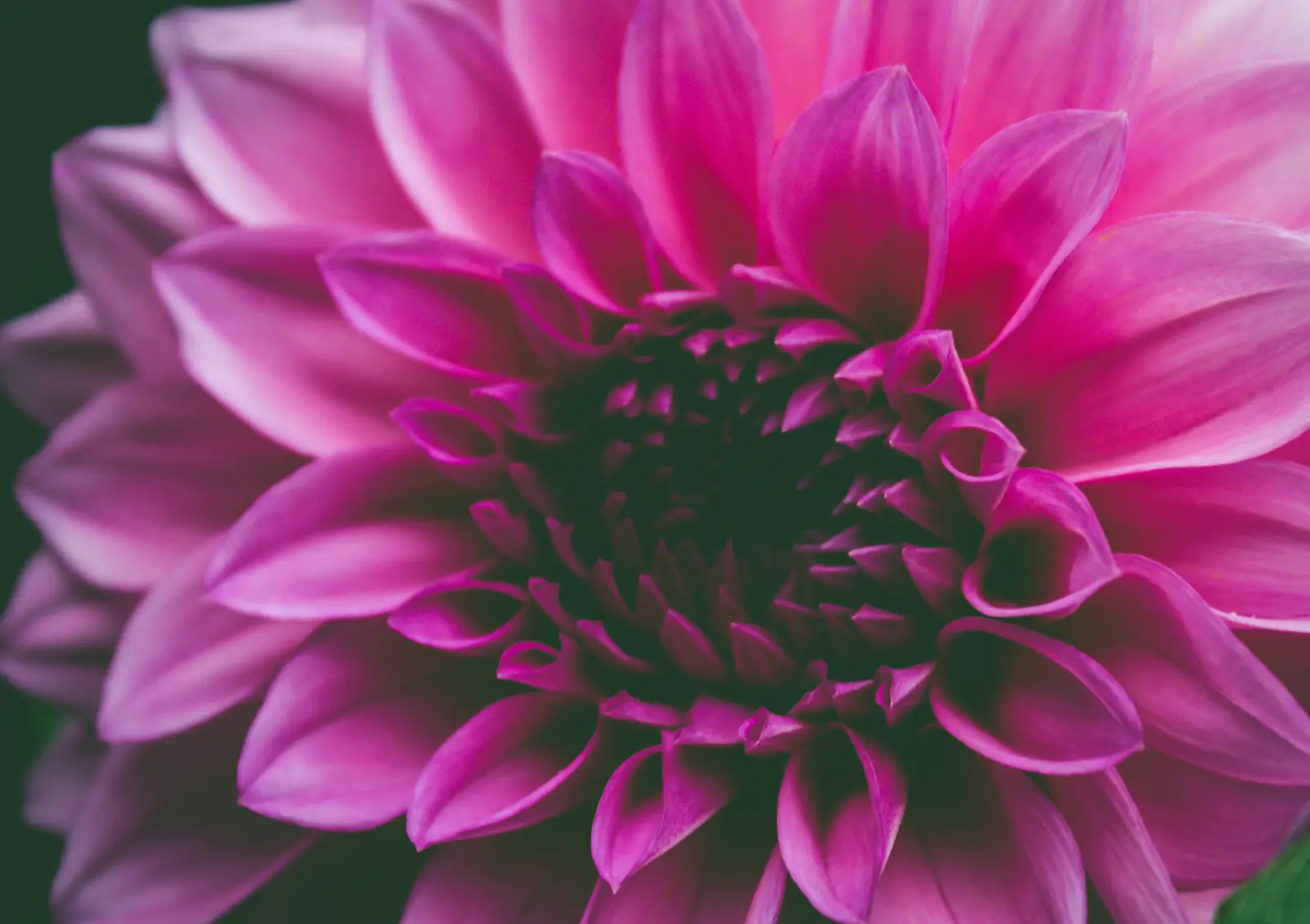
Seasonal starts with the growing cycle
A peony available in a Warsaw shop in November has not necessarily been grown outdoors nearby that autumn. Its presence tells you that someone can supply it, not which season it came from. A useful description of a seasonal bouquet should therefore say more than “available now”. Origin, growing method and harvest timing give the label substance.
Plants respond to temperature, light and their own development. Some need a cold period before flowering; others change growth in response to day length. The latter response is called photoperiodism. Different cultivars and growing regions complicate any calendar, which is why a fixed month-by-month list should be a planning aid rather than a promise.
A seasonal guide, with the limits made clear
| Part of the year | Useful starting points | Question to ask |
|---|---|---|
| Spring | Tulips, narcissus, flowering branches | Are these field-grown or brought into flower under protection? |
| Late spring and early summer | Peonies, garden roses, sweet peas where available | Which local varieties are being cut this week? |
| Summer into autumn | Dahlias, cosmos, zinnias, grasses | Has weather changed the expected harvest? |
| Winter | Evergreen foliage, branches, forced bulbs and amaryllis | Which elements are local, and which are imported or greenhouse-grown? |
The RHS places herbaceous peony flowering in late spring to early summer, while its dahlia guide describes flowering through summer and autumn until frost. Those broad patterns are useful in Central Europe too, but they are not a Warsaw harvest forecast. Location, cultivar and the year's weather still matter.
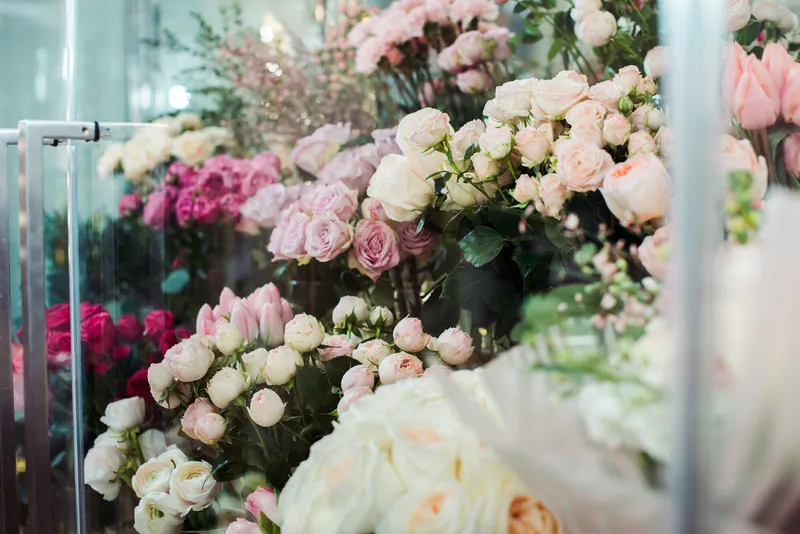
How greenhouses change the flower calendar
A greenhouse protects crops from some outdoor conditions and allows growers to manage temperature, water and, in some systems, light. That can bring a harvest forward or extend it. A tulip in a winter bouquet may be perfectly fresh while belonging to a different production schedule from a tulip flowering outside in spring.
Ask separately about heated production, an unheated tunnel and an outdoor field. All three can be described casually as “grown nearby”, but they are not the same growing system. Likewise, “greenhouse-grown” does not tell you whether heating was used or where the greenhouse stands. Our article on How Light Levels Affect Stem Length, Bloom Size, and Color in Cut Flowers explains another part of crop scheduling.
For an event, this distinction helps set the brief. If local field-grown flowers are essential, say so explicitly and accept a narrower winter choice. If you mainly want colours and textures that suit the time of year, allow the florist to explain a broader mix. You do not need to arrive with botanical knowledge; describing the feeling you want at the table is a good beginning.
How city florists source seasonal stems
A florist may buy from a nearby grower, a wholesale market, an importer or an auction-linked supplier. These channels can overlap within one bouquet. A local studio describes where arranging takes place; it does not establish the origin of every stem on the workbench.
Royal FloraHolland is one reference point for understanding the European flower trade. For an individual order, however, a direct question is more useful than a general supply-chain label: “Do you know the grower or country of origin of the main flowers?” A florist may know some origins and need to check others.
Quality inspection then determines what can actually be used. Bruised petals, crushed stems or flowers at the wrong opening stage may rule out a planned variety. For a Friday dinner, flowers ready to open that afternoon can be suitable; for a bouquet expected to travel and be enjoyed over several days, the same selection may need adjusting.
Local and imported flowers: ask what each label means
There are at least three separate decisions: appearance, freshness and the environmental priorities of the buyer. A short distance alone does not prove good handling or a smaller overall footprint. Equally, an imported stem is not automatically unsuitable. Avoid drawing a conclusion about production from the postcode of the shop.
If supporting regional growers is the goal, ask how much of the proposed bouquet can come from them and which items would be substitutions. If avoiding heated crops is the goal, ask that question directly. A clearly limited answer is more useful than an unsupported claim that the whole bouquet is “eco-friendly”.
The growing side is explored in Spring Greenhouse Checklist for Producing Strong, Market-Ready Cut Flowers. For buying, start with a realistic choice: a winter arrangement of branches and bulbs can suit the season without pretending to be an outdoor summer harvest.
When arranging flower delivery Warsaw from Mokotow, include the destination district, date and someone who can receive the bouquet. Then ask which flowers are currently available and what may change. A delivery address in Mokotów, Śródmieście or Wola is a logistical detail; it does not establish where the flowers were grown.
What “best available” should mean in your order
Flexible selection works best when the boundaries are explicit. Instead of requiring an exact photograph, name the features that matter: a soft pink palette, a loose shape, no strong scent and a finished size that fits a small table. If peonies are essential, say that too. The florist can then explain whether the date and budget fit.
A workable example is: “For a home dinner on Friday, soft pink and cream, low enough for a table, maximum total spend €50 including delivery. Please confirm before changing the main colour or replacing peonies.” The amount is an illustrative budget, not a quoted market price. A substitute can preserve mood and proportion without being the identical flower.
My tip: make a short “must keep” and “can change” note. Put recipient sensitivities and the delivery date in the first part; put minor foliage choices in the second. This makes flexibility useful rather than vague.
Be specific about the result, too. “Similar value” may not tell you whether the replacement will be the same size. Ask whether a substitution changes the shape, scent, number of main blooms or expected opening stage. For an event, record who will approve a change and how they can be reached.
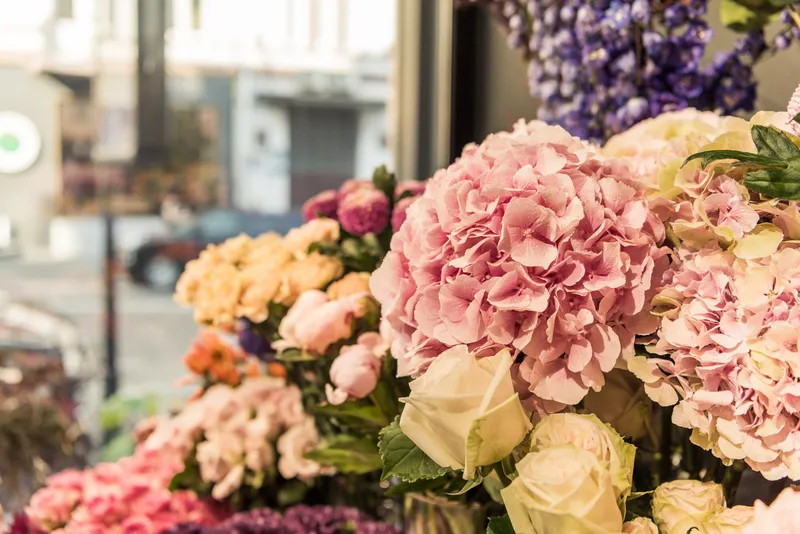
Why handling still matters after the seasonal choice
Seasonal timing cannot compensate for poor care after harvest. A stem can be cut at the right stage and still deteriorate through heat, dehydration or dirty containers. Our guide to post-harvest care in the first hours follows that journey from the cut to conditioning and storage.
At home, prepare a clean vase, remove submerged leaves and use flower food as directed. Iowa State University's care guide explains why prompt hydration and suitable handling matter. Keep the florist's care note, particularly when the bouquet includes unfamiliar varieties.
Growers and florists can also consult Penn State Extension for horticultural resources. For the buyer, the practical test remains straightforward: can the supplier explain the selection, agree sensible substitutions and give care advice for the actual flowers supplied? Those answers make “seasonal” a useful description of the order.
Common questions
Does seasonal always mean local?
No. Local flowers can be seasonal, but the terms are not identical. A seasonal bouquet may include local field stems, greenhouse-grown flowers, and carefully chosen imported flowers that are at their best in the current market. What matters is quality, timing, and a clear idea of how the flowers were grown and handled.
Are greenhouse flowers less natural than field-grown flowers?
Not necessarily. Greenhouses are part of modern horticulture and can produce excellent flowers with controlled irrigation, protection from weather, and careful crop scheduling. Field-grown flowers often have beautiful character and a strong seasonal identity, while greenhouse flowers can offer consistency, stem length, and availability during colder or less predictable months.
Why can a florist not guarantee every flower in a seasonal bouquet?
Cut flowers are affected by weather, transport, harvest stage, supplier availability, and post-harvest condition. A florist may plan for a flower and reject it on the day if it arrives bruised, too open, too tight, or too weak. Substitution is often a sign of professional care, not poor planning.
What is the best way to order seasonal flowers in a city?
Give the florist a color direction, mood, size, occasion, delivery timing, district, and any flowers you especially like or dislike. It also helps to share the recipient’s phone number, entry details, and whether someone can receive the bouquet. Then allow some flexibility. The most beautiful seasonal arrangements often come from a clear brief combined with freedom to choose the best stems available that day.
Which flowers are most associated with the seasons?
Associations vary by region, but many florists connect spring with tulips, narcissus, hyacinths, ranunculus, lilac, and peonies; summer with roses, sweet peas, cosmos, zinnias, hydrangea, and herbs; autumn with dahlias, chrysanthemums, grasses, berries, and seed heads; and winter with amaryllis, hellebores, anemones, evergreens, branches, and forced bulbs.