How Light Levels Affect Stem Length, Bloom Size, and Color in Cut Flowers
5 min read
Light controls how long the stems grow, how big the flowers get and how strong the colour is. What happens to roses, chrysanthemums and lisianthus at different light levels.
Waleed · first published · revised
Bloom Size: The Carbohydrate Budget Behind Beauty
A flower is an expensive structure for a plant to build. Petals, reproductive organs, pigments, fragrance compounds, and nectar all require energy and raw materials. Bloom size is therefore closely linked to the plant’s carbohydrate supply, which is strongly influenced by daily light integral, or DLI: the total amount of photosynthetically useful light a plant receives over a day.
When light levels are too low, buds may develop slowly or incompletely. Flowers can open smaller than expected, with fewer fully expanded petals, shorter vase life, or delayed anthesis. Some species may abort buds under persistent low-light conditions, especially if temperature remains high enough to demand growth but photosynthesis cannot keep pace.
Under adequate light, the plant can support larger blooms and stronger stems at the same time. This is why greenhouse managers often treat light and temperature as a pair. Warm temperatures accelerate development; light supplies the energy to support that development. If temperature is high and light is low, the crop may be pushed to grow faster than its carbohydrate budget allows.
Why More Light Is Not Always Larger Flowers
It is tempting to assume that brighter conditions always produce larger blooms. In practice, the response depends on species and stress. Excessive light can increase leaf temperature, raise transpiration demand, and intensify water stress. If the plant closes its stomata to conserve water, photosynthesis may decline even under bright light. Petals are delicate tissues, and high light combined with heat can reduce expansion or damage color compounds.
For premium cut flowers, the goal is not maximum brightness at every hour. It is an even, reliable supply of usable light, supported by irrigation, nutrition, humidity management, and temperature control. See also “How to Control Greenhouse Humidity to Prevent Botrytis in Cut Flowers”.
Color: Pigments Respond to Light Quality and Intensity
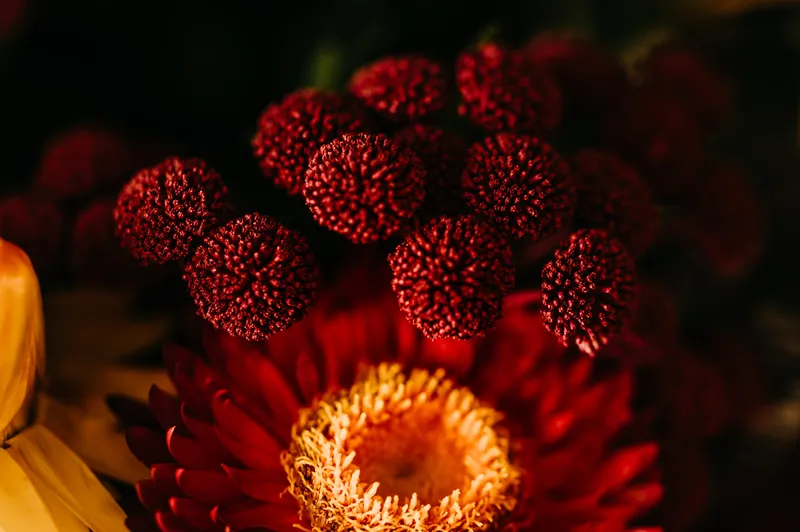
Flower color is produced by pigments such as anthocyanins, carotenoids, and betalains, depending on the species. Light affects both the formation and the stability of these pigments. This is one reason the same cultivar can look subtly different across seasons or production regions.
Anthocyanins, responsible for many red, purple, blue, and pink tones, are often encouraged by good light exposure, particularly when paired with suitable temperatures. Low light can produce paler flowers because pigment synthesis is reduced. In some crops, colors become less saturated during dark winter periods unless supplemental lighting or careful climate management is used.
Carotenoids, which contribute yellow, orange, and some red tones, are also influenced by light, though their response varies widely among species. Strong light may deepen certain colors, but it can also cause fading or bleaching if petals are exposed to intense radiation and heat. White and pale pastel flowers may show quality problems especially quickly, because bruising, browning, or sunscald is more visible.
For a deeper botanical background on plant pigments and development, the overview of anthocyanins is a useful starting point, while university extension resources such as University of Minnesota Extension offer practical horticultural guidance grounded in research.
Light Spectrum: Blue, Red, and Far-Red Effects
Modern greenhouse lighting has made growers more aware of spectrum. Traditional sunlight contains a broad range of wavelengths. Supplemental fixtures may emphasize certain bands, especially red and blue light, because these are highly active in photosynthesis. But morphology and flowering are also influenced by how plants perceive light through photoreceptors. There is more on this in “Greenhouse Climate Mistakes That Reduce Cut Flower Quality”.
Blue light often contributes to compactness, stronger leaf development, and stomatal regulation. Red light is highly efficient for photosynthesis and plays a major role in plant development. Far-red light, though less directly photosynthetic, can influence stem elongation and flowering responses. A crop grown under red-heavy light without enough blue may behave differently from one grown under a fuller spectrum.
The American Society for Horticultural Science provides access to a wide range of peer-reviewed work on controlled-environment production through ASHS, reflecting how quickly this field continues to develop.
Practical Light Management for Cut-Flower Quality
Good light management is a craft as much as a calculation. It requires measurement, observation, and an understanding of crop response over time. The following steps help translate light science into greenhouse practice:
- Measure daily light, as well as instant brightness. A midday reading can mislead; DLI gives a clearer picture of the crop’s actual daily supply.
- Match light to temperature. Avoid warm, low-light regimes that push weak growth, and watch for heat stress during bright periods.
- Use shade deliberately. Shade cloth and screens can protect color and petal quality, but excessive shading may reduce bloom size and stem strength.
- Monitor spacing and canopy density. Crowded plants alter light quality around one another and may stretch in response.
- Adjust by cultivar. Varieties within the same species can differ in stem length, color response, and light tolerance.
- Record outcomes. Note light conditions alongside harvest date, stem grade, bloom diameter, and color quality to refine future decisions.
Common questions
Does low light always make cut flowers taller?
Not always, but low light often encourages stem elongation, especially when plants perceive shading or competition. The drawback is that stems may be thinner, softer, and less able to support large blooms. True premium length comes from balanced light, spacing, temperature, and nutrition.
Can too much light damage flower color?
Yes. Very intense light, especially with high temperature or water stress, can cause fading, bleaching, browning, or uneven petal development. Sensitive pastel and white flowers may show damage most visibly. Shade screens, humidity control, and good irrigation help protect quality during bright periods.
What is the difference between light intensity and photoperiod?
Light intensity describes how bright the light is at a given moment, while photoperiod describes the length of the light and dark periods in a day. Both matter. Intensity affects photosynthesis and growth, while photoperiod can control flowering in day-length-sensitive crops such as chrysanthemums.
Is LED lighting always better for cut flowers?
LED lighting can be highly effective because it is controllable and efficient, but it is not automatically superior in every situation. Fixture placement, spectrum, intensity, heat management, crop type, and production goal all determine the result. The best lighting system is one that produces the desired stem length, bloom size, color, and timing consistently.